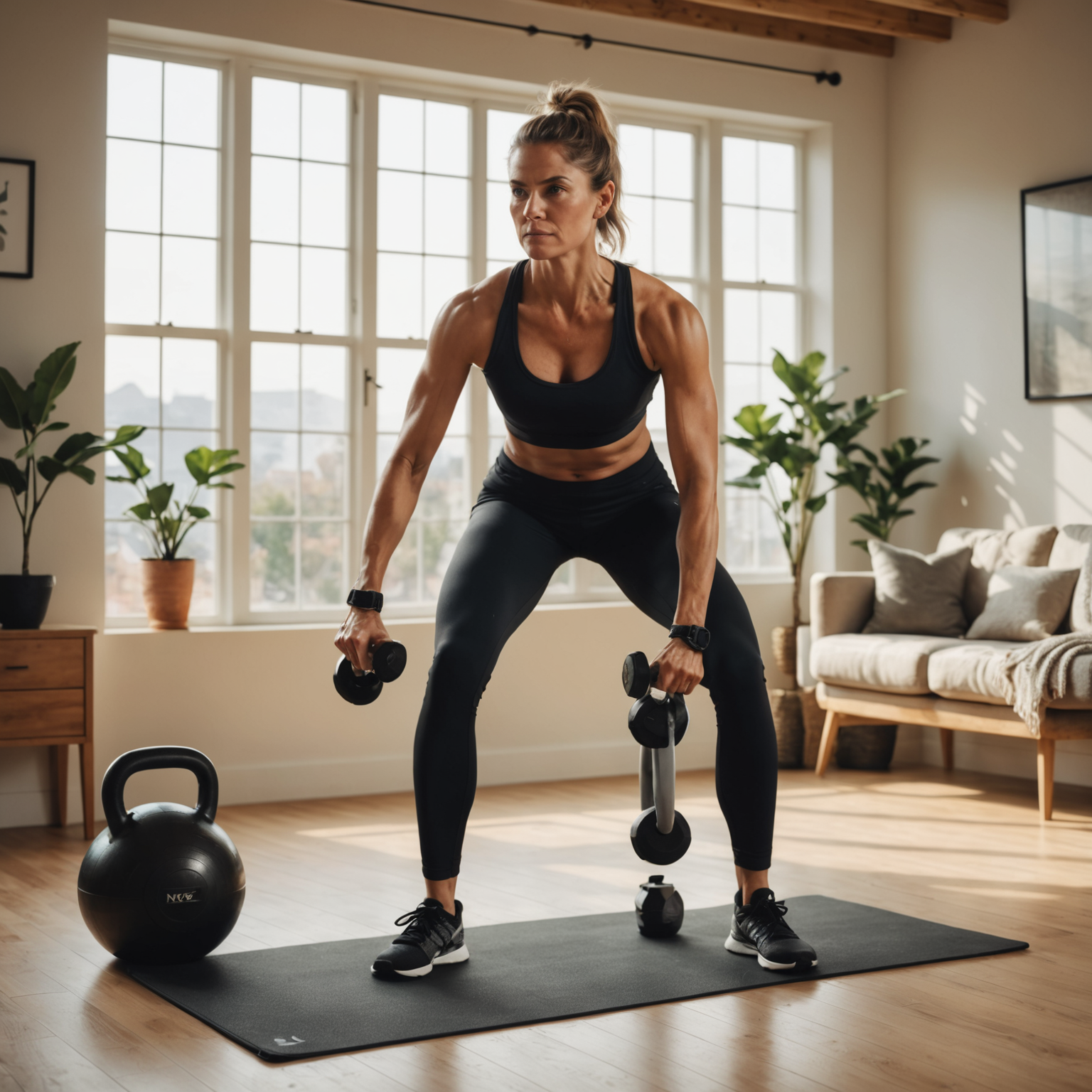
Starting your fitness journey at home doesn't mean you need to invest thousands of dollars in expensive equipment or convert an entire room into a professional gym. With smart planning and strategic purchases, you can create an effective workout space for under $200 that delivers real results. This comprehensive guide will walk you through everything you need to know about building your home gym on a budget, from essential equipment recommendations to creative storage solutions for small spaces.

Understanding Your Fitness Goals Before You Shop
Before rushing to purchase equipment, take time to clarify your fitness objectives. Are you focusing on strength training, cardiovascular fitness, flexibility, or a combination of all three? Your goals will directly influence which equipment deserves priority in your budget. A woman training for a 5K race will have different needs than someone building muscle strength or practicing yoga.
Consider your current fitness level honestly. Beginners often benefit from versatile, multi-purpose equipment that allows for progression without requiring immediate upgrades. If you're returning to fitness after a break, start with basics that support proper form and gradual intensity increases. Advanced exercisers might already know their preferences and can invest more strategically in specialized equipment.
Think about your workout preferences and personality. Do you enjoy structured programs or prefer spontaneous movement? Are you motivated by variety or do you thrive on routine? Some women love the meditative quality of yoga and Pilates, while others crave the intensity of HIIT workouts. Your equipment choices should align with activities you'll actually enjoy and stick with long-term.
Key Insight: The best home gym equipment is the kind you'll actually use consistently. Don't buy items just because they're popular or on sale—invest in tools that match your genuine interests and fitness goals.
Essential Equipment Under $200: Smart Priorities
Building an effective home gym on a budget requires strategic thinking about which items deliver the most value. The following recommendations represent equipment that offers maximum versatility, durability, and return on investment. Each piece serves multiple purposes and supports various workout styles, making them worthy additions to any home fitness space.
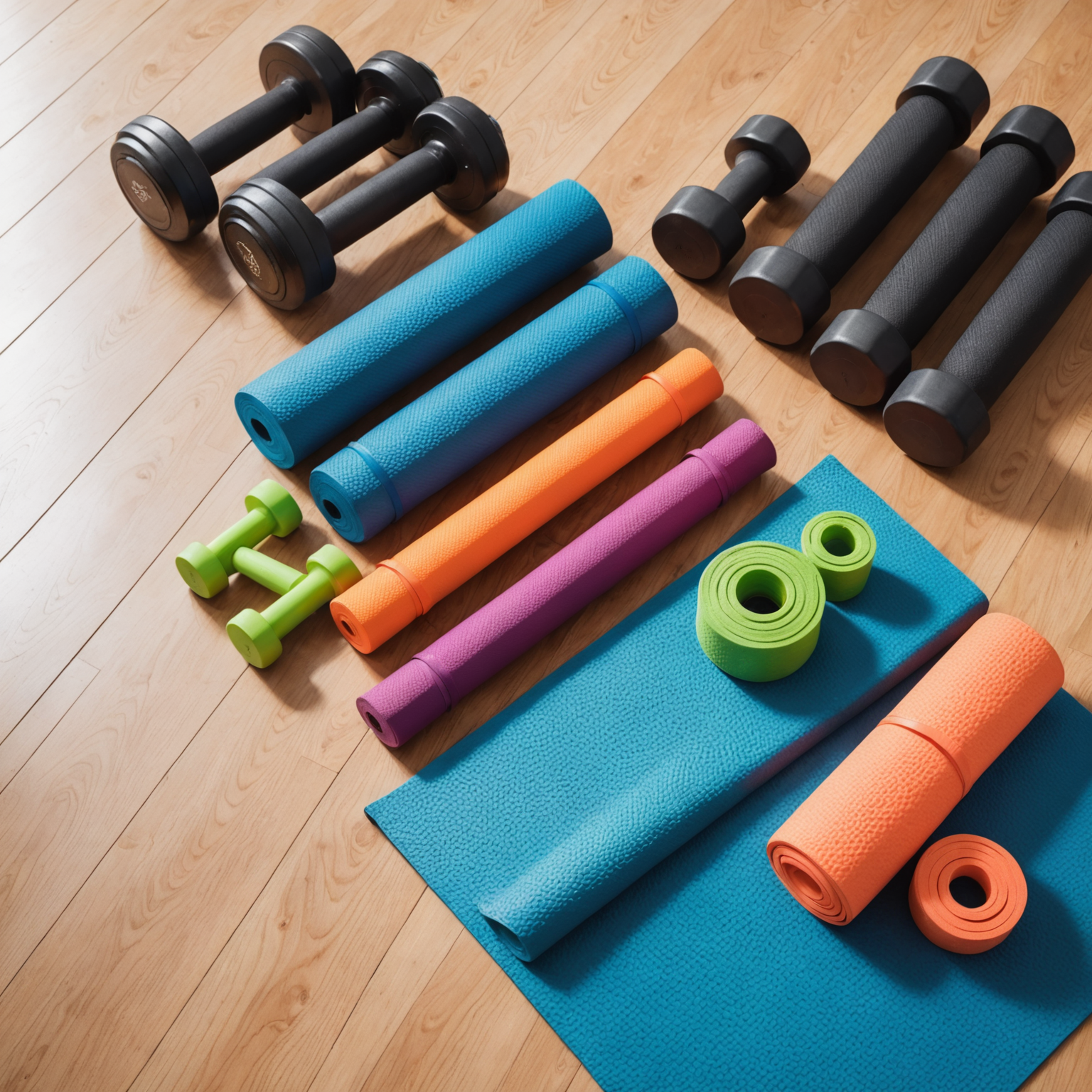
Priority Level 1: The Absolute Essentials ($80-100)
Quality Yoga Mat
A good yoga mat is the foundation of any home workout space. Look for one that's at least 6mm thick for adequate cushioning during floor exercises, with a non-slip surface that stays grippy even when you're sweating. Avoid ultra-cheap mats that compress quickly or slide around—they'll frustrate you and potentially cause injury.
Why it matters: You'll use this for yoga, Pilates, stretching, core work, bodyweight exercises, and cool-downs. It defines your workout space and protects your joints during floor-based movements.
Resistance Bands Set
A set of resistance bands with varying resistance levels (typically light, medium, and heavy) provides incredible versatility. Look for fabric bands rather than latex tubes—they're more durable, comfortable against skin, and less likely to snap. A set with door anchors and handles expands your exercise options significantly.
Why it matters: Resistance bands enable strength training for every major muscle group, support stretching and mobility work, and travel easily. They're perfect for beginners building foundational strength and advanced exercisers adding variety.
Adjustable Dumbbells (Pair)
Start with a pair of adjustable dumbbells in the 5-25 pound range. While fixed-weight dumbbells are cheaper per piece, adjustable versions save space and money long-term. Look for designs with secure locking mechanisms and comfortable grips. If adjustable dumbbells exceed your budget, start with two pairs of fixed weights (8-10 lbs and 15-20 lbs).
Why it matters: Dumbbells are essential for progressive strength training. They allow you to target specific muscle groups, maintain proper form, and gradually increase resistance as you get stronger.
Priority Level 2: High-Value Additions ($50-70)
Jump Rope
A quality jump rope with adjustable length and comfortable handles provides excellent cardiovascular training in minimal space. Look for one with ball bearings for smooth rotation and a durable cable that won't tangle easily. Weighted handles can add an extra challenge as you progress.
Why it matters: Jump rope delivers intense cardio workouts in just 10-15 minutes, improves coordination and bone density, and requires almost no space. It's one of the most efficient calorie-burning tools available.
Foam Roller
A medium-density foam roller (not too soft, not rock-hard) helps with muscle recovery, flexibility, and self-massage. Standard 36-inch rollers work for most people, though shorter versions save space. Textured rollers provide deeper tissue work but can be intense for beginners.
Why it matters: Regular foam rolling reduces muscle soreness, improves flexibility, and helps prevent injury. It's essential for recovery and maintaining mobility as you increase workout intensity.
Stability Ball
Choose a stability ball sized appropriately for your height (55cm for under 5'4", 65cm for 5'4"-5'10", 75cm for over 5'10"). Look for anti-burst construction rated for at least 600 pounds. A ball with a slightly textured surface provides better grip during exercises.
Why it matters: Stability balls add challenge to core exercises, support stretching and flexibility work, and can double as an active sitting option. They're excellent for developing balance and engaging stabilizer muscles.
Priority Level 3: Nice-to-Have Enhancements ($30-50)
Yoga Blocks (Set of 2)
Cork or foam yoga blocks help modify poses, improve alignment, and make certain stretches accessible. They're especially valuable for beginners working on flexibility or anyone with limited range of motion.
Resistance Loop Bands
These small fabric loops are perfect for lower body activation work, glute exercises, and warm-ups. They're different from regular resistance bands and complement them well, especially for hip and leg work.
Exercise Sliders
Small discs that slide on carpet or hard floors add intensity to core work and create challenging variations of familiar exercises. They're compact, affordable, and surprisingly effective for full-body conditioning.

Space-Saving Storage Solutions for Small Apartments
One of the biggest challenges of home fitness isn't the equipment itself—it's finding ways to store it without cluttering your living space. Many women abandon their home workout routines simply because equipment becomes an eyesore or obstacle in their homes. The key is creating storage solutions that are both functional and aesthetically pleasing, making it easy to access your equipment while keeping your space organized.
Vertical Storage Strategies
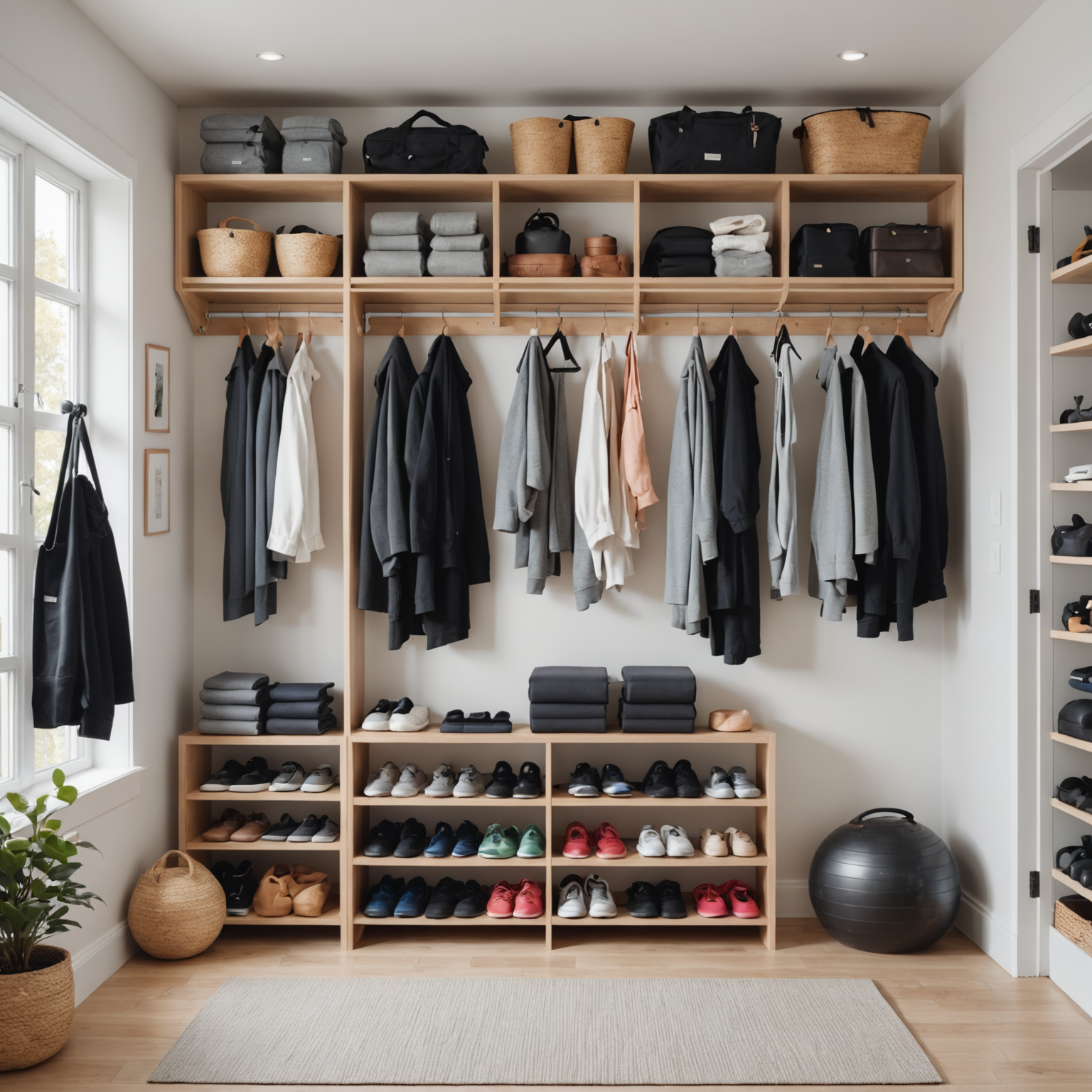
When floor space is limited, think vertically. Wall-mounted solutions keep equipment accessible while freeing up valuable square footage. Install a simple pegboard system on a closet door or wall to hang resistance bands, jump ropes, and yoga straps. Use adhesive hooks rated for appropriate weight to hang your yoga mat rolled up, keeping it off the floor and ready to grab.
Over-the-door organizers designed for shoes work brilliantly for storing smaller fitness items like resistance bands, exercise sliders, and hand weights. These organizers are inexpensive, require no installation, and can be moved easily if you rearrange your space. Choose clear pockets so you can quickly see what's inside without digging through compartments.
Floating shelves provide both storage and display opportunities. Arrange your dumbbells, foam roller, and stability ball on sturdy floating shelves, treating them as decorative elements rather than clutter. Choose shelves that complement your room's aesthetic—wooden shelves for a natural look, white for minimalist spaces, or metal for industrial vibes.
Hidden Storage Options
For those who prefer equipment completely out of sight when not in use, several clever solutions exist. Large decorative baskets or bins can hold resistance bands, yoga blocks, and smaller items while blending seamlessly with your decor. Choose natural materials like woven seagrass or rattan for a bohemian feel, or sleek fabric bins for modern spaces.
Under-bed storage is often overlooked but incredibly practical. Flat storage containers designed to slide under beds can hold yoga mats, resistance bands, and even light dumbbells. This keeps equipment accessible but completely hidden from view. If you have a bed with built-in storage drawers, dedicate one specifically to fitness gear.
Ottoman storage benches serve double duty as seating and equipment storage. Place one at the foot of your bed or in your living room, and use it to store your foam roller, stability ball (deflated), and other larger items. This solution is particularly effective in studio apartments where every piece of furniture needs multiple functions.
Pro Storage Tip
Create a "workout station" in one corner of your bedroom or living room. Use a small bookshelf or storage cart to keep all equipment in one designated spot. This psychological boundary helps separate workout space from living space, even in small apartments. Add a small plant or motivational print to make the area feel intentional and inspiring.
Multi-Purpose Furniture Solutions
Invest in furniture that supports both daily living and fitness activities. A sturdy coffee table can serve as a platform for step-ups or elevated push-ups. A dining chair becomes equipment for tricep dips, Bulgarian split squats, and assisted stretches. Your couch provides support for incline exercises and modified planks.
Consider a storage bench with a cushioned top that's sturdy enough to support your weight during exercises. These benches can hold equipment inside while serving as a workout bench for exercises like step-ups, box squats, or seated exercises. Place it at the foot of your bed or along a wall where it won't obstruct traffic flow.
Real Success Stories: Women Who Made It Work
Theory is helpful, but real-world examples provide the inspiration and practical insights that truly motivate. The following stories come from women who successfully created effective home workout spaces despite various constraints—limited budgets, small living spaces, and busy schedules. Their experiences offer valuable lessons about what works, what doesn't, and how to adapt general advice to your specific situation.
I live in a 450-square-foot studio apartment in the city, and I was convinced I couldn't work out at home effectively. I started with just a yoga mat and resistance bands that I stored in a decorative basket next to my couch. Within three months, I'd added dumbbells and a jump rope, all for under $150. The key was creating a routine where I'd roll out my mat in the same spot every morning—it became my signal that it was workout time. Now, a year later, I'm stronger than I've ever been, and I've saved hundreds on gym memberships.
Jessica's story highlights an important principle: consistency matters more than equipment quantity. She didn't wait until she had a "perfect" setup—she started with basics and built gradually. Her designated workout spot, even in a tiny studio, created the psychological space needed for regular exercise. The decorative basket solution kept her equipment accessible without making her apartment feel like a gym.
After my second baby, I needed to get back into shape but couldn't afford gym memberships or childcare for workout time. I converted a corner of our garage into my workout space for about $180. I bought a thick yoga mat, a set of resistance bands, adjustable dumbbells, and a foam roller. I hung a full-length mirror from a thrift store on the wall and added a small Bluetooth speaker. That corner became my sanctuary. I'd work out during nap times or after the kids went to bed. Two years later, I'm in the best shape of my life, and my daughters now join me for "exercise time" on their own little mats.
Maria's garage transformation demonstrates how even unfinished spaces can become effective workout areas. The mirror addition was brilliant—it cost under $20 at a thrift store but provided crucial feedback on form and technique. Her story also shows how home gyms can positively influence family culture, with her daughters now viewing exercise as a normal, enjoyable part of daily life.
I'm a graduate student living in a shared house with three roommates, so private space is limited. I keep all my equipment in a large canvas tote bag under my bed—yoga mat, resistance bands, a jump rope, and yoga blocks. When I want to work out, I move my desk chair aside and roll out my mat. The whole setup cost me $95, and I can pack everything up in two minutes when I'm done. I've been doing this for eight months now, and I've completed two full workout programs. The portability actually became an advantage because I can take everything to the park or my parents' house on weekends.
Aisha's ultra-minimal approach proves that even the most constrained living situations can accommodate home fitness. Her canvas tote solution is genius for shared living spaces—everything stays organized, portable, and out of sight when not in use. The fact that she's completed two full programs with this basic setup demonstrates that equipment limitations don't prevent real progress.
Prioritizing Purchases Based on Your Fitness Goals
Not all fitness goals require the same equipment, and understanding these differences helps you spend wisely. The following framework helps you prioritize purchases based on your primary objectives, ensuring every dollar contributes directly to your success. Remember that these categories aren't mutually exclusive—most women have multiple goals—but identifying your primary focus helps guide initial purchases.
For Strength Building and Muscle Toning
If your main goal is building strength and developing lean muscle, prioritize equipment that provides progressive resistance. Start with adjustable dumbbells as your foundation—they're essential for targeting specific muscle groups and allowing gradual weight increases as you get stronger. Resistance bands come next, offering variable resistance and enabling exercises that dumbbells can't replicate, particularly for back and shoulder work.
Your third priority should be a stability ball, which adds instability to exercises, forcing your core and stabilizer muscles to work harder. This creates more comprehensive strength development than exercises performed on stable surfaces. A yoga mat is necessary for floor-based strength work like planks, push-ups, and core exercises.
| Equipment | Priority | Cost | Why It Matters |
|---|---|---|---|
| Adjustable Dumbbells | High | $40-60 | Essential for progressive overload and muscle building |
| Resistance Bands | High | $15-25 | Enables full-body strength training with variable resistance |
| Stability Ball | Medium | $20-30 | Adds instability for enhanced core and stabilizer engagement |
| Yoga Mat | Medium | $25-40 | Necessary for floor-based strength exercises |
For Cardiovascular Fitness and Weight Loss
When cardiovascular fitness and calorie burning are your primary goals, equipment that elevates heart rate efficiently takes priority. A jump rope is your best investment—it delivers intense cardio in minimal space and time, burning more calories per minute than most other exercises. It's also incredibly affordable and portable.
Resistance bands rank second because they enable circuit training and HIIT workouts that combine strength and cardio. These high-intensity intervals are extremely effective for fat loss and cardiovascular conditioning. A yoga mat provides cushioning for high-impact movements like burpees, mountain climbers, and jumping exercises.
Consider adding exercise sliders to your setup—they create challenging cardio movements that are lower impact than jumping but still highly effective. Sliders enable exercises like mountain climbers, plank jacks, and lateral lunges that elevate heart rate while being apartment-friendly and quiet.
For Flexibility, Mobility, and Mind-Body Connection
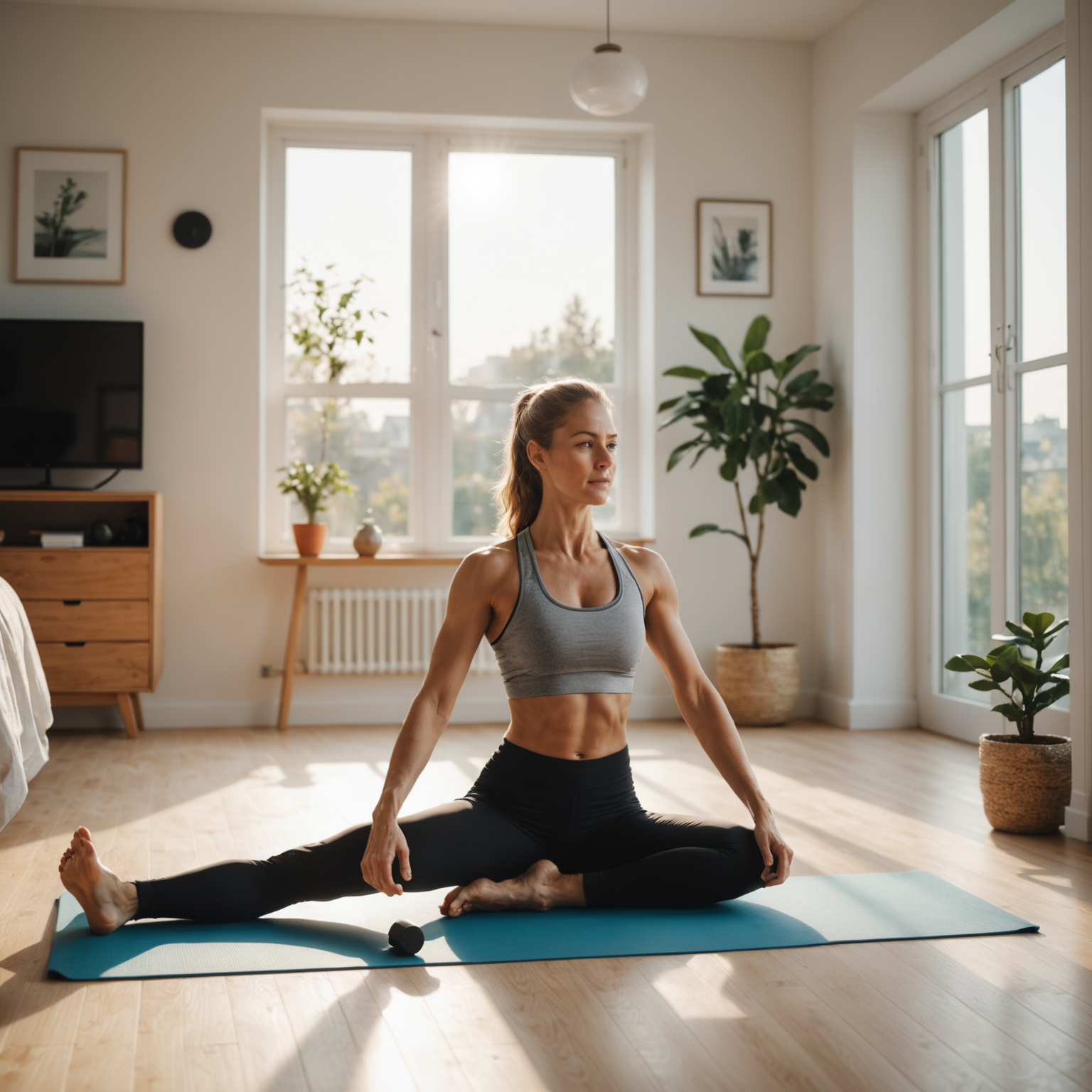
If yoga, Pilates, or general flexibility improvement is your focus, your equipment priorities shift significantly. A high-quality yoga mat becomes your most important investment—don't skimp here, as you'll spend significant time on it. Look for extra cushioning and excellent grip, as these factors dramatically affect your practice quality and enjoyment.
Yoga blocks are your second priority, making many poses accessible and helping you maintain proper alignment as you develop flexibility. They're essential for beginners and valuable even for advanced practitioners. Resistance bands (particularly lighter resistance) support stretching and mobility work, helping you deepen stretches safely and work on flexibility progressively.
A foam roller becomes crucial for this goal category, as it supports muscle recovery, releases tension, and improves overall mobility. Regular foam rolling complements flexibility work by addressing muscle tightness that limits range of motion. Consider adding a yoga strap (often under $10) to assist with stretches and improve flexibility in shoulders and hamstrings.
Budget Allocation Tip: Regardless of your primary goal, aim to spend 40-50% of your budget on your top priority equipment, 30-35% on secondary priorities, and 15-25% on complementary items. This ensures you have what you truly need while leaving room for variety and progression.
Avoiding Common Beginner Mistakes
Learning from others' mistakes saves money, time, and frustration. The following pitfalls trap many women starting their home fitness journeys, but awareness helps you avoid them entirely. These insights come from common patterns observed across hundreds of home gym setups and the lessons learned from what didn't work.
Mistake #1: Buying Too Much Too Soon
The enthusiasm of starting a new fitness journey often leads to over-purchasing. You see equipment on sale, read about "must-have" items, and imagine yourself using everything regularly. Reality rarely matches these expectations. Many women end up with equipment they never use, wasting money and creating clutter.
Start with absolute basics and add items only after you've established a consistent routine. If you're working out regularly with your initial equipment and genuinely feel limited by what you have, that's the time to expand. This approach ensures every purchase serves a real need rather than an imagined one.
Mistake #2: Prioritizing Aesthetics Over Function
Instagram-worthy home gyms are beautiful, but pretty equipment doesn't guarantee results. Some women invest in expensive, aesthetically pleasing items that don't actually support their fitness goals. A gorgeous set of light dumbbells might look perfect in photos, but if they're too light to challenge you, they won't help you progress.
Choose equipment based on functionality first, aesthetics second. That said, if you find functional equipment that also appeals to you visually, that's ideal—you're more likely to use items you enjoy looking at. Just don't sacrifice effectiveness for appearance.
Mistake #3: Ignoring Space Constraints
Buying equipment without considering where you'll store it leads to frustration and abandoned routines. A stability ball might be perfect for your goals, but if you have nowhere to keep it except in the middle of your living room, it becomes an obstacle rather than a tool. Similarly, large equipment that's difficult to set up and put away often goes unused.
Before purchasing anything, identify exactly where you'll store it and how you'll access it for workouts. If the answer isn't clear and practical, reconsider the purchase or find a storage solution first. Your equipment should integrate seamlessly into your living space, not disrupt it.
Mistake #4: Neglecting Quality for Price
While budget consciousness is important, extremely cheap equipment often costs more in the long run. Resistance bands that snap after two weeks, dumbbells with uncomfortable grips that cause blisters, or yoga mats that compress into paper-thin sheets waste money and discourage consistent practice.
Research products before buying, read reviews from actual users, and invest in mid-range quality rather than the absolute cheapest options. The difference between a $10 yoga mat and a $30 one is significant in terms of durability and comfort. The difference between a $30 mat and a $100 one is often minimal for most users.
- Start with 3-4 essential items rather than trying to buy everything at once
- Test equipment in stores when possible to assess quality and comfort
- Read reviews from women with similar fitness levels and goals
- Measure your available space before purchasing larger items
- Plan storage solutions before equipment arrives
- Choose versatile equipment that serves multiple purposes
- Invest in quality for items you'll use daily (yoga mat, dumbbells)
- Consider used equipment for items like stability balls and foam rollers
Maximizing Your Investment: Getting the Most from Basic Equipment
The true value of home gym equipment isn't in the items themselves but in how creatively and consistently you use them. Even the most basic setup can deliver comprehensive, challenging workouts when you understand how to maximize each piece. This section explores advanced techniques and creative applications that extract maximum value from minimal equipment.
Advanced Resistance Band Techniques
Resistance bands are incredibly versatile, but many people use only a fraction of their potential. Beyond basic exercises, bands enable advanced techniques like accommodating resistance (adding bands to dumbbell exercises for variable resistance curves), speed work (using lighter bands for explosive movements), and assisted exercises (using bands to support bodyweight movements like pull-ups or pistol squats).
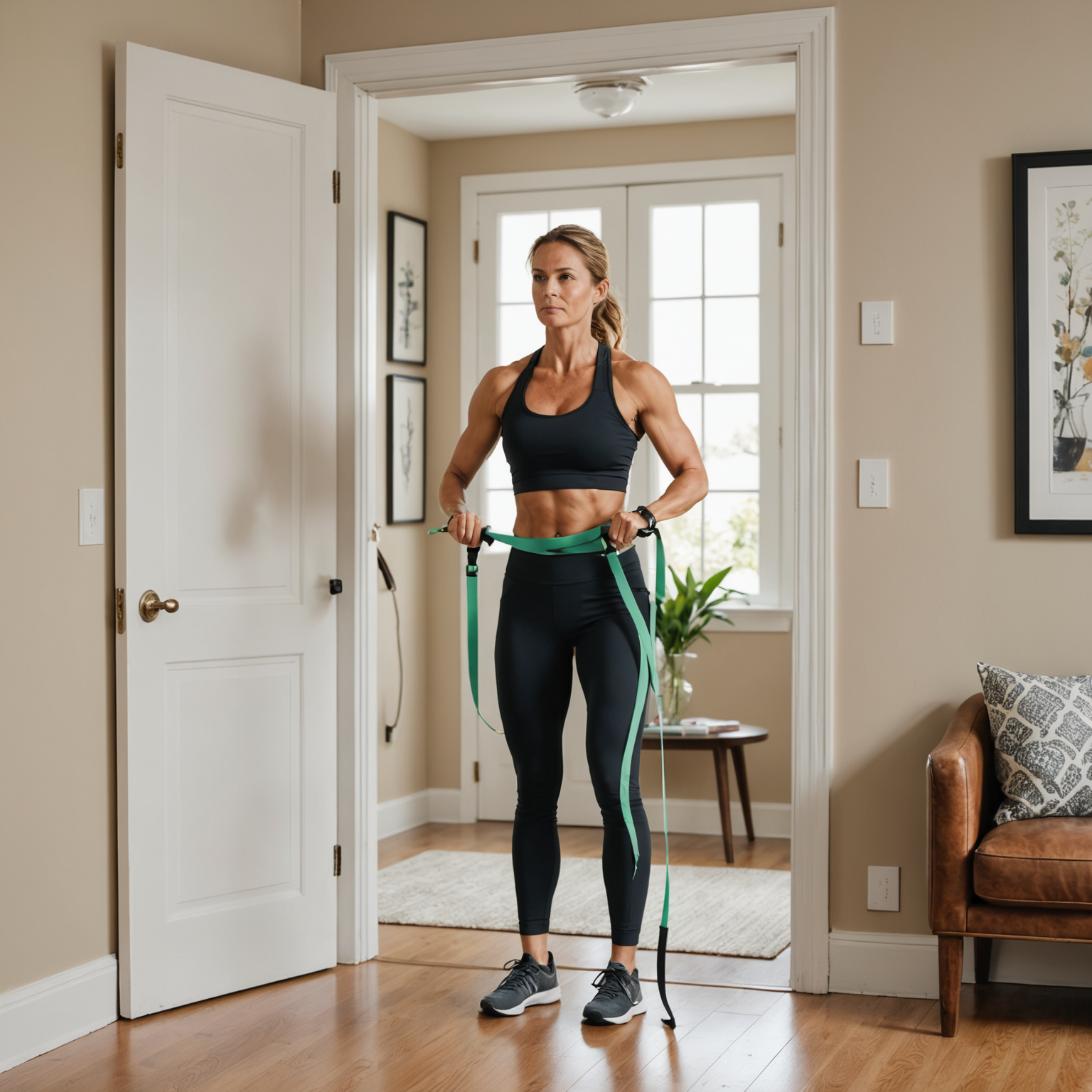
Experiment with different anchor points to change exercise angles and muscle emphasis. Anchor bands at floor level for upward pulling movements, at waist height for horizontal pulls and presses, and overhead for downward pulling exercises. A simple door anchor (often included with band sets) transforms your equipment into a complete cable machine alternative.
Combine multiple bands for increased resistance as you get stronger, rather than immediately buying heavier bands. This approach extends the useful life of your initial purchase and provides more precise resistance adjustments. You can also use bands to add resistance to bodyweight exercises like push-ups, squats, and glute bridges, creating progressive overload without additional equipment.
Creative Dumbbell Applications
Dumbbells aren't just for traditional strength exercises. Use them as anchors for resistance bands, creating unique resistance curves. Hold them during bodyweight exercises like lunges or step-ups to add intensity. Use a single dumbbell for rotational exercises that build core strength and functional movement patterns.
Tempo training with dumbbells—slowing down the eccentric (lowering) phase of exercises—dramatically increases time under tension and muscle building stimulus without requiring heavier weights. A 10-pound dumbbell becomes significantly more challenging when you take 4-5 seconds to lower it during each repetition.
Unilateral training (working one side at a time) with dumbbells addresses muscle imbalances and increases core engagement. Single-arm exercises require your core to work harder to maintain stability, effectively turning every upper body exercise into a core exercise as well.
Workout Programming Tip
Create workout "complexes" that use the same piece of equipment for multiple exercises performed back-to-back without rest. For example, a dumbbell complex might include squats, Romanian deadlifts, bent-over rows, overhead presses, and bicep curls performed consecutively. This approach maximizes efficiency and creates challenging metabolic conditioning workouts with minimal equipment.
Building Your Routine: From Equipment to Results
Having equipment is just the beginning—the real challenge is using it consistently and effectively. Many women invest in home gym equipment with great intentions but struggle to maintain regular workout routines. The difference between equipment that gathers dust and equipment that transforms your fitness lies in how you structure your approach to home training.
Creating Your Workout Schedule
Consistency trumps intensity when building sustainable fitness habits. Rather than planning ambitious daily workouts you'll struggle to maintain, start with a realistic schedule you can actually keep. Three 30-minute sessions per week is infinitely better than planning seven 60-minute workouts and completing none.
Schedule workouts like appointments—put them in your calendar and treat them as non-negotiable commitments. Morning workouts often have higher completion rates because fewer unexpected obligations arise early in the day. However, the best workout time is whenever you'll actually do it consistently, whether that's dawn, lunch break, or evening.
Prepare your workout space the night before. Roll out your mat, set out your equipment, and lay out your workout clothes. This preparation removes friction and decision-making from your morning routine, making it easier to follow through when motivation is low.
Progressive Overload with Limited Equipment
Progressive overload—gradually increasing workout difficulty—is essential for continued improvement. With limited equipment, you can't simply keep adding weight indefinitely, but numerous other progression methods exist. Increase repetitions, add sets, decrease rest periods, slow down tempo, or increase range of motion.
Track your workouts in a simple notebook or phone app. Record exercises, sets, reps, and any notes about how the workout felt. This data helps you identify when you're ready to progress and ensures you're consistently challenging yourself rather than repeating the same workouts indefinitely.
Periodize your training by focusing on different goals in different phases. Spend 4-6 weeks emphasizing strength with lower reps and longer rest, then shift to higher reps and shorter rest for muscular endurance. This variation prevents plateaus and keeps training interesting.
Staying Motivated Long-Term
Motivation naturally fluctuates, so build systems that support consistency even when enthusiasm wanes. Create a workout playlist that energizes you—music significantly impacts workout quality and enjoyment. Many women find that having dedicated workout music helps them mentally transition into exercise mode.
Join online communities of women pursuing similar fitness goals. Sharing progress, challenges, and victories with others creates accountability and provides support during difficult periods. Many free communities exist on social media platforms, offering encouragement without requiring expensive memberships.
Celebrate non-scale victories: increased energy, better sleep, improved mood, clothes fitting better, exercises becoming easier, or simply maintaining consistency. These indicators of progress are often more meaningful than numbers on a scale and provide motivation during plateaus.
Vary your workouts regularly to prevent boredom. With basic equipment, you can still create dozens of different workout combinations. Follow different online programs, try new exercise variations, or create themed workouts (upper body focus, lower body emphasis, full-body circuits, cardio-intensive sessions).
Conclusion: Your Journey Starts Now
Creating an effective home gym on a budget isn't about having the most equipment or the perfect space—it's about making smart choices that align with your goals, lifestyle, and constraints. The women whose stories you've read in this guide started exactly where you are now, with limited budgets and space, but they took action and built sustainable fitness practices that transformed their lives.
Remember that your home gym will evolve as you do. Start with essentials, establish consistent habits, and add equipment strategically as your needs become clear. The $200 budget outlined in this guide provides everything necessary for comprehensive, effective workouts that deliver real results. You don't need more to start—you just need to start.
Your fitness journey is personal and unique. Don't compare your beginning to someone else's middle or end. Focus on progress, not perfection. Show up consistently, challenge yourself appropriately, and trust the process. The equipment is simply a tool—your commitment, consistency, and effort are what truly matter.
Take the first step today. Choose your priority equipment based on your goals, order it, and plan where you'll store it. Schedule your first workout before the equipment even arrives. Commit to showing up for yourself, and watch as your small home gym space becomes the foundation for significant life changes.