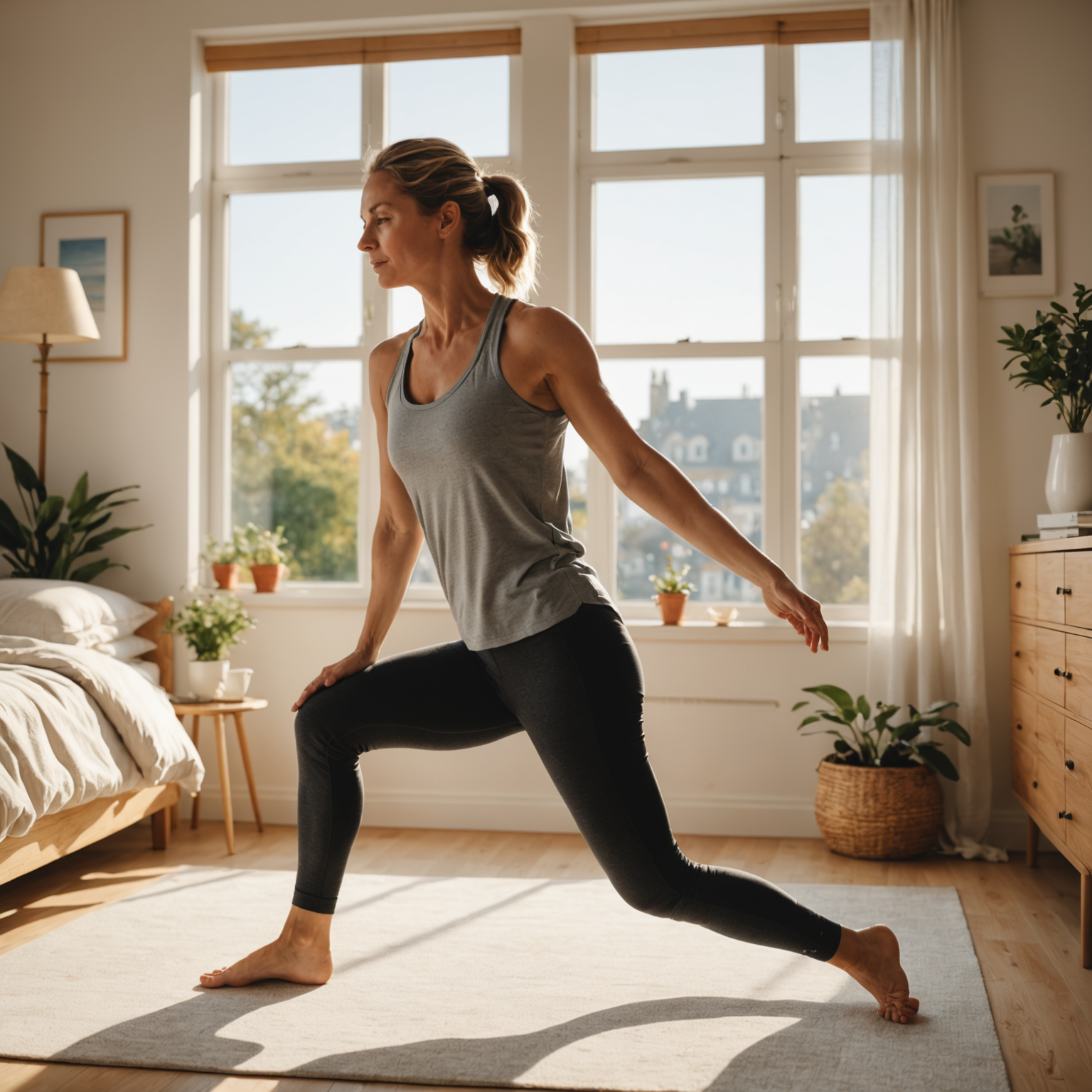
My Journey to Morning Movement
Six months ago, I was that person who hit snooze three times, dragged myself out of bed, and spent the first hour of my day feeling stiff, foggy, and completely disconnected from my body. My lower back ached from sleeping, my shoulders felt tight from stress, and by mid-morning, I was already counting down the hours until I could crawl back into bed.
As a woman navigating the complexities of hormonal fluctuations, work stress, and the constant juggling act of daily responsibilities, I knew something had to change. I'd read countless articles about morning routines and wellness practices, but everything seemed too complicated or time-consuming. Then I discovered something beautifully simple: five specific stretches that took less time than brewing my morning coffee but delivered transformative results.
What started as a desperate attempt to ease my chronic stiffness evolved into a non-negotiable part of my morning ritual. These stretches didn't just change how my body felt—they fundamentally shifted my entire approach to each day. The physical benefits were immediate, but the mental and emotional transformation was what truly surprised me.
Today, I'm sharing this personal journey and the exact five stretches that became my secret weapon for starting each day with energy, clarity, and a sense of empowerment. Whether you're dealing with hormonal changes, stress-related tension, or simply want to feel more connected to your body, these movements can create a ripple effect of positive change throughout your entire day.
Understanding Why Morning Stretches Matter for Women's Bodies
Before diving into the specific stretches, it's crucial to understand why morning movement is particularly beneficial for women's bodies. Our bodies are incredibly dynamic systems that respond to hormonal fluctuations, stress, sleep patterns, and daily activities in unique ways.
During sleep, our muscles naturally tighten and our fascia (the connective tissue surrounding muscles) can become restricted. For women, this is often compounded by hormonal changes that affect tissue elasticity and inflammation levels. Estrogen and progesterone fluctuations throughout our monthly cycle can impact joint flexibility, muscle recovery, and even pain perception.
Morning stretching serves multiple critical functions. First, it gently awakens your nervous system, signaling to your body that it's time to transition from rest to activity. This gradual activation is far healthier than jolting your system awake with caffeine or rushing into your day. Second, stretching increases blood flow to your muscles, delivering oxygen and nutrients that help clear metabolic waste products accumulated during sleep.
For women specifically, morning stretches can help manage symptoms related to hormonal changes. Many women experience increased stiffness, joint discomfort, or muscle tension during certain phases of their cycle or during perimenopause and menopause. Gentle stretching can help alleviate these symptoms by promoting circulation, reducing inflammation, and maintaining joint mobility.
The Mind-Body Connection
Beyond the physical benefits, morning stretches create a powerful mind-body connection that sets the tone for your entire day. Taking even five minutes to move mindfully and breathe intentionally activates your parasympathetic nervous system, reducing cortisol levels and promoting a sense of calm and centeredness. This mental clarity and emotional balance can be particularly valuable for women managing multiple responsibilities and stress sources.
The Five Stretches That Changed Everything
After months of experimentation and research, I've refined my morning routine to these five essential stretches. Each one targets specific areas that commonly hold tension in women's bodies, and together they create a comprehensive full-body awakening that takes just five to seven minutes. The beauty of this sequence is its simplicity—no equipment needed, no complicated positions, just intentional movement that your body will thank you for.
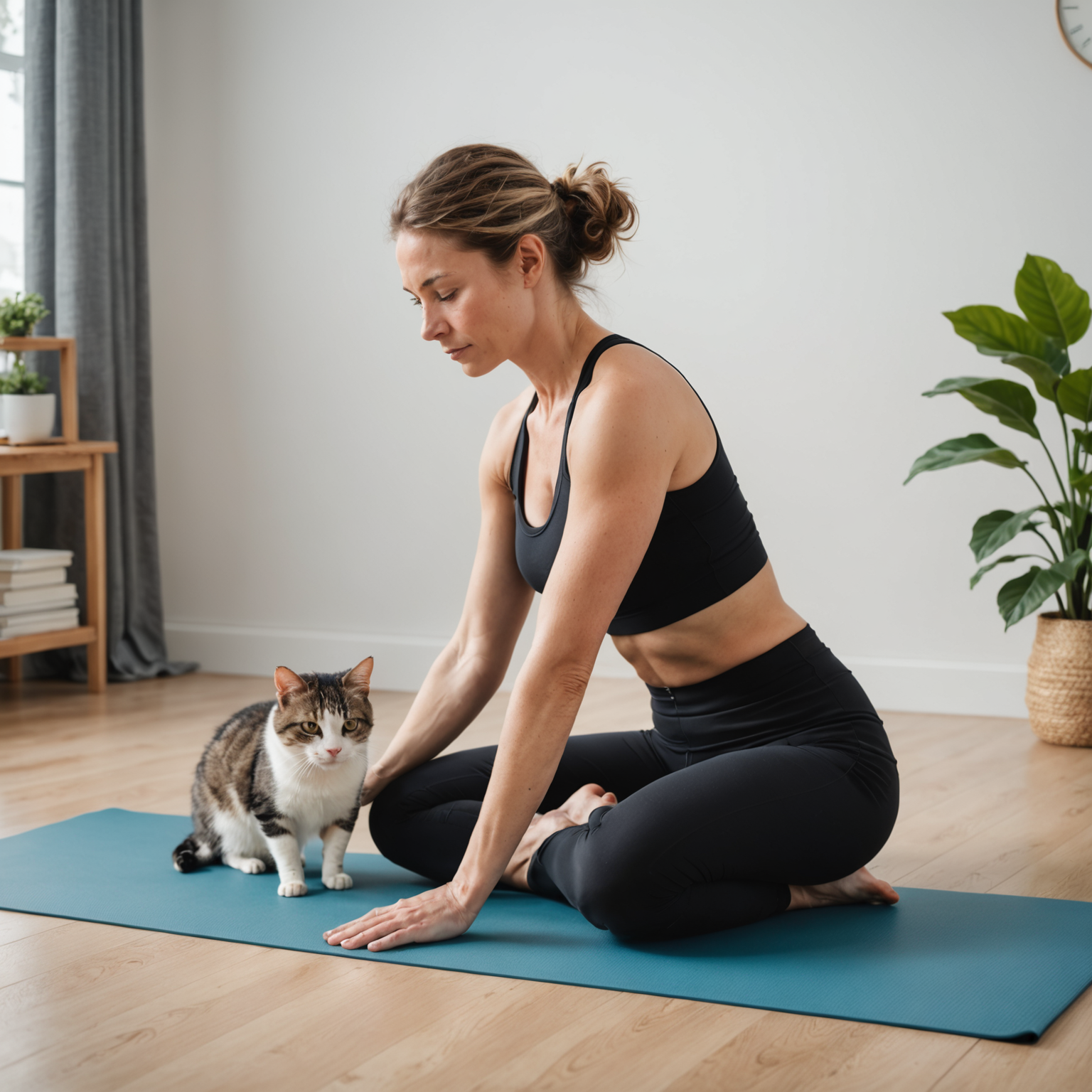
Stretch 1: Cat-Cow Flow for Spinal Mobility
Cat-Cow Flow
Target Areas: Spine, core, shoulders, neck
Duration: 1-2 minutes (8-10 repetitions)
How to Perform:
- Start on your hands and knees in a tabletop position, with wrists directly under shoulders and knees under hips
- Inhale deeply as you drop your belly toward the floor, lift your chest and chin upward, and gently arch your back (Cow position)
- Exhale completely as you round your spine toward the ceiling, tuck your chin to your chest, and draw your belly button toward your spine (Cat position)
- Continue flowing between these two positions, synchronizing movement with your breath
- Move slowly and mindfully, focusing on articulating each vertebra
Why It Works: This dynamic stretch is perfect for awakening your spine after hours of sleep. It gently mobilizes every segment of your vertebral column, releases tension in your back muscles, and promotes fluid movement in your spinal discs. For women experiencing lower back discomfort or stiffness, this stretch provides immediate relief while strengthening core stability.
Personal Insight: This was the first stretch that made me realize how disconnected I'd become from my body. Initially, my spine felt like one rigid board, but within two weeks, I could feel individual vertebrae moving. The rhythmic breathing combined with movement became my meditation, setting a calm, centered tone for the day ahead.
Stretch 2: Child's Pose for Deep Release
Child's Pose (Balasana)
Target Areas: Hips, thighs, ankles, shoulders, back
Duration: 1-2 minutes (hold with deep breathing)
How to Perform:
- From tabletop position, bring your big toes together and separate your knees about hip-width apart
- Sit your hips back toward your heels as you extend your arms forward on the floor
- Rest your forehead on the mat or a cushion if needed
- Allow your entire body to soften and release into the stretch
- Take slow, deep breaths, feeling your ribcage expand into your thighs with each inhale
- With each exhale, consciously release tension from your shoulders, back, and hips
Why It Works: Child's Pose is a restorative stretch that gently opens your hips while releasing tension throughout your entire back body. It's particularly beneficial for women because it creates space in the pelvic region, which can help alleviate menstrual discomfort and support reproductive health. The forward fold also activates your parasympathetic nervous system, promoting relaxation and stress relief.
Personal Insight: This became my sanctuary stretch. On mornings when I felt overwhelmed or anxious, spending an extra minute in Child's Pose helped me reset emotionally. I learned to use this time to set intentions for my day, transforming a simple stretch into a powerful mindfulness practice.
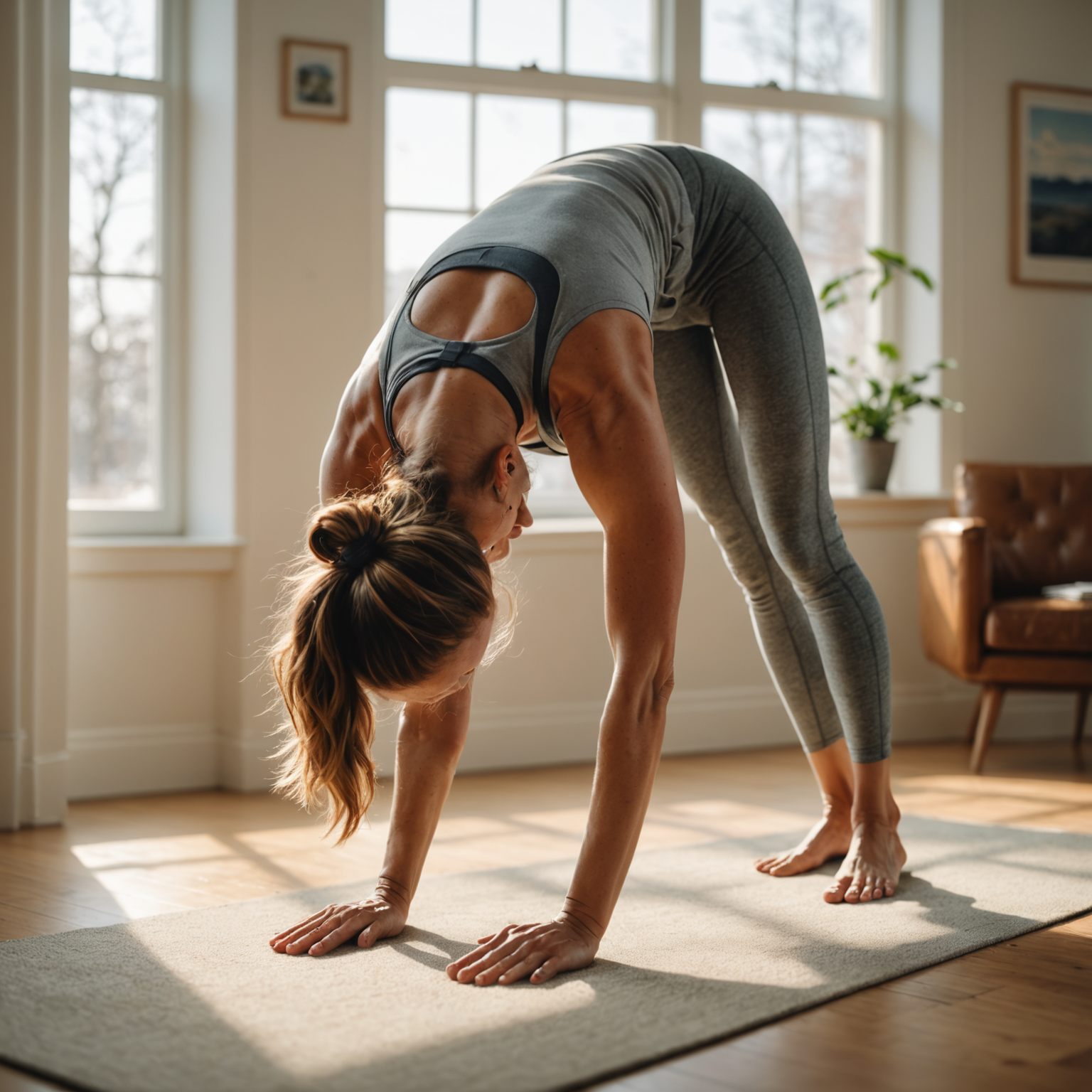
Stretch 3: Downward Dog for Full-Body Awakening
Downward Facing Dog (Adho Mukha Svanasana)
Target Areas: Hamstrings, calves, shoulders, arms, back
Duration: 30-60 seconds (with gentle pedaling motion)
How to Perform:
- From tabletop position, tuck your toes under and lift your hips up and back
- Press your hands firmly into the mat, spreading your fingers wide
- Work toward straightening your legs, but keep a slight bend in your knees if needed
- Press your chest toward your thighs and let your head hang naturally
- Gently pedal your feet, bending one knee while straightening the other
- Focus on lengthening your spine and creating space between your vertebrae
Why It Works: Downward Dog is often called the "ultimate full-body stretch" for good reason. It simultaneously stretches your posterior chain (hamstrings, calves, back) while building strength in your shoulders and arms. The inversion aspect increases blood flow to your brain, promoting mental clarity and alertness. For women, this stretch helps counteract the effects of prolonged sitting and can alleviate tension headaches.
Personal Insight: Initially, this stretch felt challenging—my hamstrings were so tight I could barely straighten my legs. But I learned that the pedaling motion was key. By alternating which leg I focused on, I could gradually work deeper into the stretch without forcing anything. Now, this pose makes me feel energized and ready to tackle my day.
Stretch 4: Seated Spinal Twist for Digestive Health
Seated Spinal Twist (Ardha Matsyendrasana)
Target Areas: Spine, obliques, hips, shoulders
Duration: 30-45 seconds per side
How to Perform:
- Sit on the floor with your legs extended in front of you
- Bend your right knee and place your right foot on the outside of your left thigh
- Keep your left leg extended or bend it with your foot near your right hip
- Inhale to lengthen your spine, sitting up tall
- Exhale as you twist to the right, placing your left elbow on the outside of your right knee
- Place your right hand behind you for support
- With each inhale, lengthen your spine; with each exhale, deepen the twist slightly
- Keep your shoulders relaxed and gaze over your right shoulder
- Repeat on the opposite side
Why It Works: Spinal twists are incredibly beneficial for women's digestive health and detoxification. The gentle compression and release of your abdominal organs stimulates digestion and can help alleviate bloating—particularly helpful during hormonal fluctuations. Twists also maintain spinal mobility and release tension in your obliques and lower back muscles.
Personal Insight: This stretch became my secret weapon for managing digestive discomfort, especially during my menstrual cycle. I noticed that on mornings when I included this twist, I felt less bloated throughout the day. The rotational movement also helped release tension I didn't even know I was holding in my mid-back.
Stretch 5: Figure-Four Hip Opener
Figure-Four Hip Stretch (Reclined Pigeon)
Target Areas: Hips, glutes, lower back, piriformis
Duration: 45-60 seconds per side
How to Perform:
- Lie on your back with both knees bent and feet flat on the floor
- Cross your right ankle over your left thigh, just above the knee, creating a figure-four shape
- Flex your right foot to protect your knee joint
- Thread your right arm through the space between your legs
- Clasp your hands behind your left thigh or on top of your left shin
- Gently draw your left thigh toward your chest until you feel a stretch in your right hip
- Keep your head and shoulders relaxed on the mat
- Breathe deeply and allow your hip to release with each exhale
- Repeat on the opposite side
Why It Works: Hip tightness is incredibly common in women, often resulting from prolonged sitting, stress-related tension, or hormonal changes that affect connective tissue. This stretch targets the deep hip rotators and piriformis muscle, which can contribute to lower back pain and sciatic discomfort when tight. Opening your hips also has emotional benefits—many people store stress and trauma in their hip region, and releasing this tension can feel emotionally liberating.
Personal Insight: This was the stretch that surprised me most. The first time I tried it, I realized just how tight my hips had become. But more than the physical release, I experienced an unexpected emotional release. Some mornings, holding this stretch brought tears to my eyes—not from pain, but from the release of tension I'd been carrying. It became a powerful reminder to check in with my emotional state, not just my physical body.
Building Your Consistent Morning Routine
Knowing the stretches is one thing; actually doing them consistently is another. After six months of daily practice, I've learned several strategies that helped me transform these stretches from a good intention into an unbreakable habit.
Start Small and Build Gradually: Don't pressure yourself to perform all five stretches perfectly from day one. I began with just the Cat-Cow flow for the first week, then gradually added one new stretch each week. This approach prevented overwhelm and allowed my body to adapt to each movement before adding complexity.
Create Environmental Cues: I keep my yoga mat rolled out in my bedroom, positioned where I'll see it immediately upon waking. This visual reminder eliminates the friction of having to retrieve equipment and makes it easier to follow through. I also laid out comfortable stretching clothes the night before, removing another potential barrier.
Link to Existing Habits: Habit stacking is incredibly powerful. I linked my stretching routine to my existing habit of waking up and opening my bedroom curtains. The sequence became automatic: wake up, open curtains, step onto mat, begin stretching. This connection to an established habit made the new behavior feel natural rather than forced.
Pro Tip: Set your alarm 10 minutes earlier than usual. This extra time buffer means you won't feel rushed, and you can move through your stretches mindfully rather than hurrying through them. The quality of your practice matters more than speed.
Track Your Progress: I created a simple tracking system using a calendar where I marked each day I completed my stretches. Seeing the chain of consecutive days motivated me to maintain consistency. I also kept brief notes about how I felt before and after stretching, which helped me recognize patterns and celebrate improvements.
Be Flexible and Compassionate: Some mornings, I only had time for three stretches instead of five. Rather than viewing this as failure, I celebrated doing something rather than nothing. On particularly busy or stressful mornings, even two minutes of Cat-Cow flow made a difference. Perfection isn't the goal—consistency and self-compassion are.
How These Stretches Support Women Through Hormonal Changes
One of the most profound benefits I've experienced from this morning routine is how it helps me navigate hormonal fluctuations with greater ease and awareness. As women, our bodies undergo constant hormonal changes—monthly cycles, pregnancy, postpartum, perimenopause, and menopause—each bringing unique physical and emotional challenges.
During Menstruation: The week before and during my period, I used to experience significant lower back pain and hip stiffness. The Figure-Four hip stretch and Child's Pose became essential tools for managing these symptoms. The gentle compression in Child's Pose can help alleviate menstrual cramps, while hip opening stretches reduce lower back tension. I learned to modify the intensity based on how I felt—some days going deeper, other days staying gentle.
Managing PMS Symptoms: The mood swings and irritability that often accompany PMS became more manageable when I maintained my morning stretching routine. The combination of physical movement and mindful breathing helps regulate cortisol levels and promotes the release of endorphins. I noticed that on days when I stretched, I felt more emotionally balanced and better equipped to handle stress.
Supporting Perimenopause and Menopause: For women in perimenopause or menopause, maintaining flexibility and joint mobility becomes increasingly important as estrogen levels decline. Estrogen plays a role in maintaining connective tissue elasticity, so its reduction can lead to increased stiffness and joint discomfort. Regular stretching helps counteract these effects by promoting circulation and maintaining range of motion.
Stress Management and Cortisol Regulation: Chronic stress elevates cortisol levels, which can disrupt hormonal balance and contribute to weight gain, sleep problems, and mood issues. The mindful breathing and gentle movement in this stretching routine activates the parasympathetic nervous system, helping to lower cortisol and promote hormonal balance. This is particularly important for women juggling multiple responsibilities and stress sources.
Listening to Your Body's Wisdom
These stretches taught me to tune into my body's signals and honor what I need each day. Some mornings, my body craves deeper stretches and longer holds. Other days, especially during my menstrual cycle, I need gentler, more restorative movements. This practice of listening and responding to my body's needs has extended beyond my morning routine, helping me make better choices throughout the day about rest, nutrition, and activity levels.
The Ripple Effect: Beyond Physical Benefits
While the physical benefits of these morning stretches are significant—reduced stiffness, improved flexibility, better posture, and decreased pain—the most transformative changes have been mental and emotional. This five-minute practice became a gateway to a more mindful, intentional approach to my entire day.
Enhanced Body Awareness: Before starting this routine, I moved through my days largely disconnected from my physical body, only noticing it when something hurt. Now, I have a heightened awareness of how I hold tension, how my posture affects my energy, and what my body needs throughout the day. This awareness helps me make better choices about movement, rest, and self-care.
Improved Mental Clarity: The combination of movement and breathwork creates a meditative state that clears mental fog and enhances focus. I found that on mornings when I stretched, I was more productive, creative, and able to handle complex tasks with greater ease. The mental clarity extended throughout my entire day, not just the morning hours.
Emotional Regulation: Perhaps the most unexpected benefit has been improved emotional regulation. The practice of moving mindfully and breathing intentionally taught me to pause and respond rather than react to stressful situations. I became better at recognizing when I was holding tension or feeling overwhelmed, and I developed tools to address these feelings before they escalated.
Increased Self-Confidence: Committing to this daily practice and following through built my self-confidence in profound ways. Each morning that I showed up for myself, even when I didn't feel like it, reinforced that I am capable, disciplined, and worthy of care. This confidence spilled over into other areas of my life, empowering me to set boundaries, pursue goals, and advocate for my needs.
Better Sleep Quality: Interestingly, my morning stretching routine improved my sleep quality. The stress reduction and physical activity helped regulate my circadian rhythm, and the mindfulness practice made it easier to quiet my mind at bedtime. I fell asleep faster and experienced fewer middle-of-the-night awakenings.

Practical Tips for Success
Based on my experience and the lessons I've learned over six months of consistent practice, here are practical tips to help you successfully integrate these stretches into your morning routine:
Prepare the Night Before: Set yourself up for success by preparing everything you need the evening before. Lay out comfortable clothes, position your mat, and set your alarm with enough buffer time. Eliminating morning decisions makes it easier to follow through.
Start with Just One Stretch: If five stretches feel overwhelming, begin with just the Cat-Cow flow. Master that one movement, make it a habit, then gradually add others. Building slowly creates sustainable change.
Use Modifications When Needed: Every body is different, and your needs will vary day to day. Use props like cushions, blocks, or folded blankets to make stretches more accessible. There's no shame in modifying—it's actually a sign of body wisdom and self-awareness.
Focus on Breath: Your breath is the bridge between your body and mind. Make conscious breathing a priority during each stretch. Inhale deeply through your nose, exhale completely through your mouth. Let your breath guide the depth and duration of each stretch.
Create a Pleasant Environment: Make your stretching space inviting. Open curtains to let in natural light, play gentle music if that helps you focus, or light a candle. Creating a pleasant environment makes the practice something you look forward to rather than a chore.
Be Patient with Progress: Flexibility and mobility improvements take time. Don't compare your day one to someone else's day 365. Celebrate small victories—touching your toes a little closer, holding a stretch a few seconds longer, or simply showing up consistently.
Connect with Your Why: On difficult mornings when motivation is low, reconnect with your reasons for starting this practice. For me, it's about feeling energized, reducing pain, and starting my day with intention. Your why might be different, but keeping it front of mind helps maintain consistency.
Remember: This practice is for you, not for perfection. Some mornings will feel amazing, others will feel challenging. Both are valuable. The goal is consistency and self-care, not achieving perfect form or maximum flexibility.
Conclusion: Your Invitation to Transform Your Mornings
Six months ago, I couldn't have imagined how five simple stretches would transform not just my mornings, but my entire approach to wellness and self-care. What began as a desperate attempt to ease physical stiffness evolved into a powerful practice that supports my body through hormonal changes, manages stress, and sets a positive, intentional tone for each day.
The beauty of this routine lies in its simplicity and accessibility. You don't need expensive equipment, a gym membership, or hours of free time. You just need five to seven minutes, a small space, and a willingness to show up for yourself. These stretches work with your body's natural rhythms, supporting you through the unique challenges that women face—hormonal fluctuations, stress, physical tension, and the constant demands of daily life.
I encourage you to start small. Choose one stretch that resonates with you and commit to doing it tomorrow morning. Notice how you feel. Pay attention to the subtle shifts in your energy, mood, and physical comfort. Build from there, adding stretches gradually as they become part of your natural morning rhythm.
Remember, this isn't about adding another item to your to-do list or achieving perfect flexibility. It's about creating a moment of connection with your body, honoring your needs, and starting each day from a place of strength and intention. Your body is capable of amazing things, and it deserves this daily gift of movement and care.
The transformation I've experienced—reduced pain, increased energy, better emotional regulation, and a deeper connection to my body—is available to you too. All it takes is showing up, breathing deeply, and moving with intention. Your future self will thank you for starting today.
Here's to energized mornings, reduced stiffness, and the powerful practice of showing up for yourself, one stretch at a time.